The first action recorded in the Bible is an act of creation.
On the first day was the creation of light, the second was the sky and seas, the third the clay that made the land. The Lord put much time and care into these creations, to such a precision that if any single cell or atom were constructed in a different way, the entire universe would fall apart. But more than that, God had a plan for this universe, and it had to begin with the creation on the third day.
And on the sixth day God made man. He created man in his own image and named him Adam. And God gave the man the ability to choose. He could choose what to name the animals; he could choose where to grow the plants. He put a tree in the center of the garden that Adam lived in and told him to not eat the fruit growing from it. He could have refrained from giving him this command; if the tree was harmful he could have removed it; yet he let Adam make the choice.
He allowed Adam the ability to choose because God is an artist with love for his creation. On the third day he created clay that he would use to sculpt his finest creation on the sixth. A creation that he deemed “very good.” And though he understood the inevitable cost that would come from giving his masterpiece a working mind, one that dared to challenge him, he did so with grace. For God is an artist full of love, and he could not help but create another artist to share the feeling with.
And for a time Adam lived in the portrait that his father painted for him. He lived in the wild reds and greens and blues that made up the garden his father grew. And in that time Adam found himself to be an artist as well. He would name the feathered beasts in the morning and dance with his wife in the afternoon. He would grow a tree at dawn and whittle a plank at dusk. And his work was not work because he loved what he did.
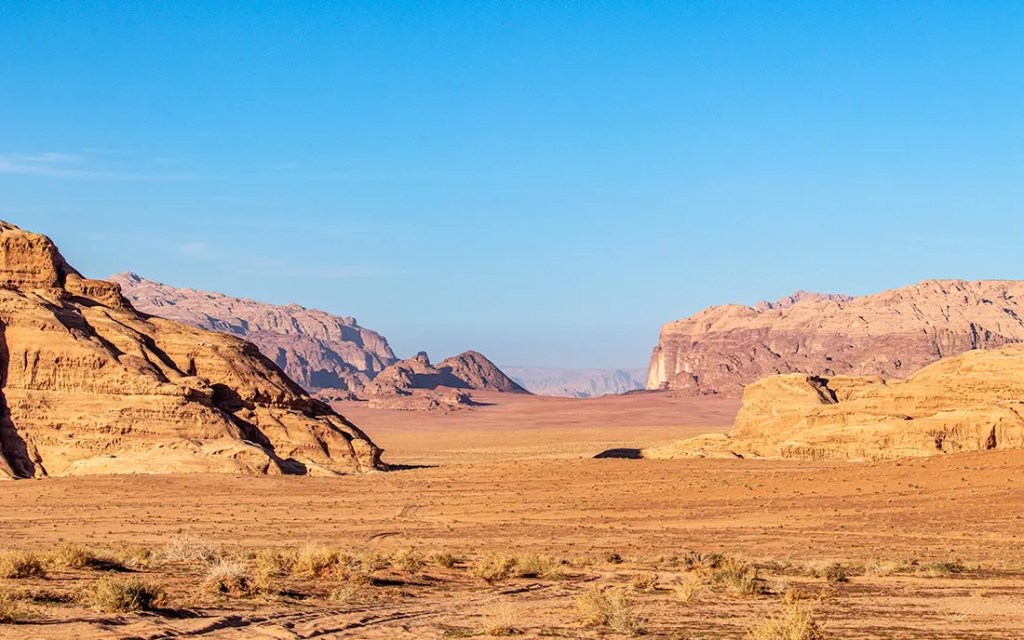
But the unchallenged world is not one an artist lives in for very long. So one day the man ate the fruit, and ashamed of what he had done, left the grove his father had planted for him. And what was once a sea of color was now a field of dust and sand. And though God loved Adam, Adam grew to resent God. For the kindness of the father to let his son wander away left the son with pinpricks in his heart from his own mistakes. These needles would slowly poke at the man again and again, and the more Adam kept his eyes turned away from God, the deeper they seemed to dig.
So Adam was in pain. He felt this pain in Syria, he felt this pain in Egypt. He felt it in Jericho and he felt it in Nineveh. And he focused on this pain through Rome and Germany and Spain and New York. He directed his eyes to the pinpricks of his heart and dared not to look above for his father, in case the spikes chose to dig themselves deeper when he wasn’t paying attention.
And in all his time that he focused on his pain, Adam grew to hate his father for it. He hated his father for allowing him to suffer, for turning his face away the moment he made a wrong choice. He hated his father for the dust and sand and hard labor that made up his days.
More than all of this, however, Adam hated his father because he could no longer see his face. That he couldn’t hear his voice in the air, or feel his hand on his back. Adam hated his father for taking Eden away from him, all in the name of love. And Adam hated his father because more than anything, he missed him.
So on the eighth day Adam made god. He took the rotting pools of red, green, and blue, shoved it in the solid sand he manufactured himself, and called it a god. He made god in his own image, because he could no longer recognize his father in himself. And Adam refused to allow his god the choice his Father gave him, for that is what caused his own pain in the first place. His son could do many things, but he would never be an artist.
And this new god lived in the dust and sand his father built him from. And in that time the god had no capacity to be anything other than what his father wished for him to be. So his father would come to him each day with new colors for him to replicate, of which he could only do so around half of the time. And the ground became littered with paper from trees long burned to the ground, filled with pictures of men and women the god never knew.
But eventually, time passed, and the winds would rage on. And in the winds of time the sand that made up the god would need to harden in order to withstand the changing weather. So in the middle of the dry landscape there stood a towering, shining god made of glass.
And when Adam, his father, arrived again, he called this god very good. For finally, the image of god had become his own reflection. And he no longer felt alone.


