Tag: christianity

  • Of Clay and Sand

    Of Clay and Sand

    The first action recorded in the Bible is an act of creation. 

    On the first day was the creation of light, the second was the sky and seas, the third the clay that made the land. The Lord put much time and care into these creations, to such a precision that if any single cell or atom were constructed in a different way, the entire universe would fall apart. But more than that, God had a plan for this universe, and it had to begin with the creation on the third day. 

    And on the sixth day God made man. He created man in his own image and named him Adam. And God gave the man the ability to choose. He could choose what to name the animals; he could choose where to grow the plants. He put a tree in the center of the garden that Adam lived in and told him to not eat the fruit growing from it. He could have refrained from giving him this command; if the tree was harmful he could have removed it; yet he let Adam make the choice. 

    He allowed Adam the ability to choose because God is an artist with love for his creation. On the third day he created clay that he would use to sculpt his finest creation on the sixth. A creation that he deemed “very good.” And though he understood the inevitable cost that would come from giving his masterpiece a working mind, one that dared to challenge him, he did so with grace. For God is an artist full of love, and he could not help but create another artist to share the feeling with. 

    And for a time Adam lived in the portrait that his father painted for him. He lived in the wild reds and greens and blues that made up the garden his father grew. And in that time Adam found himself to be an artist as well. He would name the feathered beasts in the morning and dance with his wife in the afternoon. He would grow a tree at dawn and whittle a plank at dusk. And his work was not work because he loved what he did. 

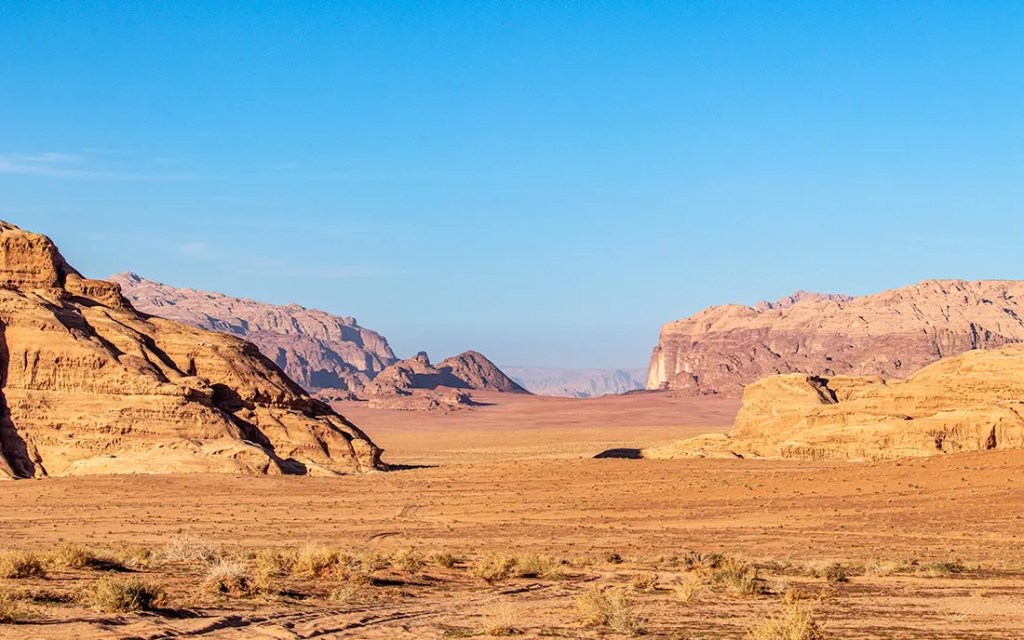
    But the unchallenged world is not one an artist lives in for very long. So one day the man ate the fruit, and ashamed of what he had done, left the grove his father had planted for him. And what was once a sea of color was now a field of dust and sand. And though God loved Adam, Adam grew to resent God. For the kindness of the father to let his son wander away left the son with pinpricks in his heart from his own mistakes. These needles would slowly poke at the man again and again, and the more Adam kept his eyes turned away from God, the deeper they seemed to dig. 

    So Adam was in pain. He felt this pain in Syria, he felt this pain in Egypt. He felt it in Jericho and he felt it in Nineveh. And he focused on this pain through Rome and Germany and Spain and New York. He directed his eyes to the pinpricks of his heart and dared not to look above for his father, in case the spikes chose to dig themselves deeper when he wasn’t paying attention. 

    And in all his time that he focused on his pain, Adam grew to hate his father for it. He hated his father for allowing him to suffer, for turning his face away the moment he made a wrong choice. He hated his father for the dust and sand and hard labor that made up his days. 

    More than all of this, however, Adam hated his father because he could no longer see his face. That he couldn’t hear his voice in the air, or feel his hand on his back. Adam hated his father for taking Eden away from him, all in the name of love. And Adam hated his father because more than anything, he missed him. 

    So on the eighth day Adam made god. He took the rotting pools of red, green, and blue, shoved it in the solid sand he manufactured himself, and called it a god. He made god in his own image, because he could no longer recognize his father in himself. And Adam refused to allow his god the choice his Father gave him, for that is what caused his own pain in the first place. His son could do many things, but he would never be an artist. 

    And this new god lived in the dust and sand his father built him from. And in that time the god had no capacity to be anything other than what his father wished for him to be. So his father would come to him each day with new colors for him to replicate, of which he could only do so around half of the time. And the ground became littered with paper from trees long burned to the ground, filled with pictures of men and women the god never knew. 

    But eventually, time passed, and the winds would rage on. And in the winds of time the sand that made up the god would need to harden in order to withstand the changing weather. So in the middle of the dry landscape there stood a towering, shining god made of glass. 

    And when Adam, his father, arrived again, he called this god very good. For finally, the image of god had become his own reflection. And he no longer felt alone.

  • Prayers From Jonah

    Prayers From Jonah

    God of the Universe. 

    I apologize for swearing the last time we spoke. I understand that I must hold these conversations to a standard greater than myself.

    The truth, God, is that I am an impossibly weak man. I am weak in all the ways that matter most. I am weak to temptation, I am weak to pride, and I am weak to self control. And it is because of this weakness that I find myself cracking every mirror I find myself looking upon. I numb the pain that comes from the shattered glass with an endless stream of everything possible. Good news, bad news, loud noise, impossible silence. Meaningless discourse about the state of the world that I use to harm myself without using a blade. And this constant numbing makes me weaker than I was before, so yes I am a weak man. 

    Perhaps the truth that makes me this weak is my insistence that I can stomach the weight of the world on my own. Your ministry on Earth revolved almost exclusively on the idea that we are made strong through our relationships, first with yourself, then with the others around us. Yet I live in the constant fear that the weakness and pain will shatter these relationships, rather than grow stronger. This is because I am a cruel person, one who tires from having people come to me with their own burdens. When I am given the opportunity to pull someone else out of their gutter, I instead turn away and focus on myself. The reality is that as I whine and complain about my problems, even now, I do this, often to the people I care about. 

    So, if I am too cruel and selfish of a person that I dread the idea of loving my own neighbor, why should I be deserving of my neighbor’s love for me? And more importantly, why should I ask for a reprieve from the all powerful Jehovah-Rapha if I am cruel in this way? Perhaps, then, this is a fitting world that I live in. A world with ceaseless, monotonous noise from places I don’t want to hear from, and absolute silence from the ones that I do. 

    In short, I have a hard time loving myself, sin and all. And because of that disdain I do not attempt to reach my hand out from the sinking ship and rather find myself sinking into the Sea, without a door to float on and only the icy waters to sink into. 

    I find my mind is a boat in the ocean, constantly creating cracks that must be patched up. And on that boat is a creature who I ignore. It is a small, furry thing with a bushy tail and bulbous cheeks. And it has the task of scouring throughout the entire boat, plugging holes into the cracks that form around it. It does so with truth: truth it has gained throughout its life. Sometimes, when the creature speaks, its truth shudders over my back, and it seals the crack it was formed out of. Other times, the creature will speak and the crack will deepen, releasing more of the torrential ocean water and swiping the creature away. I often ignore the furry beast, not because it intends to hurt me, but because of the fear I have whenever it opens its mouth. And so I ignored the one thing that was trying to patch my boat together. 

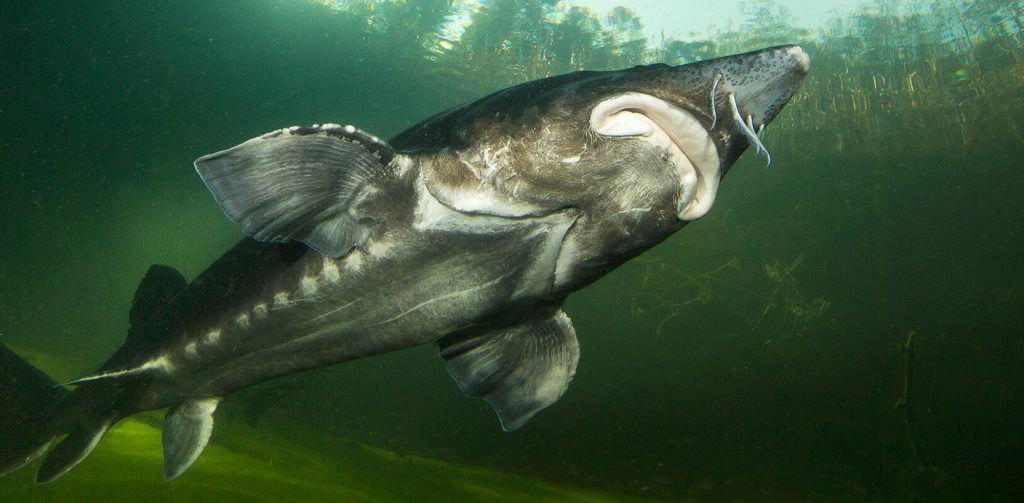
    I did this until one day, where I was out on the sea. The beast was patching holes in the boat when I found myself gazing at the water, hoping I may be ignored long enough to plunge into the depths once more. And in that moment, as I stared into the sea, I could see two large eyes staring back at me. And before I knew it, a beast even greater than the one in my boat emerged from the depths. Its eyes were cold and unfeeling, and it had scales and fins that shimmered from the reflection of the sun upon the water. And the fish opened its gaping mouth and swallowed me whole. 

    I couldn’t breathe, and I could hardly move. If I were to move any bit, the acids that made up its stomach were sure to swallow me whole. My boat was completely fractured, sizzling under the fish’s horrible gullet. 

    And I thought to myself that this was a fitting punishment for one like myself. One who appears so holy, yet crumbles under the weight of their own flesh. Perhaps this is a fitting world that I live in now, where the noise of the acid is ceaseless and relentless and the silence of everything else is unbearable. And I thought of all the choices that led me to this moment: the doubts, the pride, the arrogance, the shame. Perhaps if I invested in a larger boat, or a competent crew, or tracked the weather better I would have known that great fish come out at this time of year. 

    And perhaps if I had chosen to go to Nineveh in the first place, I would never have met the fish at all.  

    “Why are you afraid?”

    The voice called out in the belly of the beast. I turned and found the smaller creature had followed me within. Its small claws are set atop a plank of wood, and its sharp, black eyes gaze at me, creating a light that should be impossible in this dark stomach. And it asks me again:

    “Why are you afraid?”

    “Creature, we are in the belly of a beast. I have every right to be afraid. And even if we were to leave by some miracle, the boat that is our safe passage will never be how it once was. We will surely die.”

    And the creature responded:

    “Where is your faith, Jonah?”

    Around us, a plank of wood sinks into the stomach acid, and the sizzle is the only thing that echoes in this hellish place. 

    “Faith has no place in the lungs of those who God turns away from.”

    The small, furry thing looked upon me. And you said:

    “Jonah, I have been with you every moment.”

    And I froze. For the truth had washed over me, and a crack was healed. And in that moment I found myself truly looking upon the squirrel, and seeing your face within it: and inescapable truth of love and salvation. And I began to cry. 

    The truth, God, is that I am an incredibly weak man. I am weak in all the ways that matter most. And yet, in my weakness, you are both the squirrel and the fish, repairing my wounds with you undeniable truth and bringing me exactly where I must go. And that truth is what allows me to be strong, for you and the noise around me. 

    So I pray now to receive those gifts again, Lord. As I find myself departing to the seas again, repair the raft I find myself on, and let the winds guide me to where you desire. And more than all these things, let the love you have for me be echoed through every row, every wave, and every storm. 

    Amen. 

  • Shut Up and Say Something

    Shut Up and Say Something

    Everyone wants to be an influencer. 

    It’s a fact of life at this point. Morning Consult reports that in 2023, 57% of Gen Z polled stated they have an interest in social media influencing as a career. And who wouldn’t? Look at the lifestyle. Travel as a must, and you’re your own boss? Not to mention that if you’re really lucky, you can do most of it in pajamas. Who wouldn’t want that life?

    But more than that, there’s a deeper hunger in there, deeper than all of those mainly vapid (though exciting) reasons; everyone wants to be seen.

    It’s hunter-gatherer motivation, right? Humans don’t do well alone. Give a human a couple of days in isolation and their brain begins to scramble. In many old cultures, to be exiled was worse than being dead, for even in death there is a chance of people caring about you. Our brains are programmed to crave acceptance because tribal acceptance is how we evolved to survive. 

    So imagine this: a career where all of your basic needs are met and then some, where you can provide for people that you deeply care about, and for the duration of that job, your success in the field is direct confirmation that people accept who you are and what you stand for. 

    That’s the life of an influencer, at least how it’s advertised. 

    Sheesh. When you put it like that, I’d want to be an influencer too. 

    And though this term “influencer” is a relatively new one, at least in the way it’s used today, this group has existed for as long as society has. Politicians, poets, playwrights, and prophets alike have all gained some level of influence in their time. But with the smartphone’s camera and the swarming of different social feeds, the barrier to entry in this once very exclusive group has truly never been lower. What used to require a team of twenty people can now be done by a team of ten fingers. 

    And with the impending tsunami of Generative AI, that barrier continues to get lower. Now you don’t have to even be the one with the ideas.

    Now it can look something like this:

    “I am in the ______ industry selling _______. You are a top social media marketing strategist in that same industry. Generate 20 captivating topics for Instagram Reels within that topic, along with a script for each. Keep the script 250 words or less. Use a cheerful, friendly tone.” 

    Put those scripts into a text-to-speech voice mod, add some stock footage over it, play some lo-fi in the background, and you’ve made a technically perfect batch of Instagram Reels. 

    This is the modern reality of the life of an influencer. And before I go into a greater point that will generally go against this way of doing things, let me talk about why this can be a good thing. 

    The good news is this: Anyone can be an influencer. 

    The age of the gatekeeper in pop culture has long been over. Because record labels and agents and publishers are more suggestions than requirements now, anyone that wants to say something has the ability to say it, and previous factors that would prevent them from not being heard have begun to dissolve. Am I saying that those limiting factors have entirely disappeared? Absolutely not. But in this new way of doing things, if you have a voice, more likely than not, someone will hear it.

    There has never been more of a space for diverse voices than now. Hard stop. That diversity is a good thing. Hard stop.

    The good news is this: Anyone can be an influencer.

    The bad news? Anyone can be an influencer. 

    Social media is a constant flood. And while there has been endless talk of the negative actors on social media, we hardly talk about how neutral most things are. Inane posts of sports takes or Get Ready With Me routines or Stranger Things discourse. The entirety of social media is designed not simply to enrage you, but to dull your senses. Because a dulled mind is more likely to keep scrolling, even more so than an upset one. 

    And while many big companies have a hand in contributing to that system, some even being the ones who designed it in the first place, it’s our ability to contribute to it that makes these algorithms churn in the first place. 

    And I don’t blame people for going this route! Heck, I’ve gone that route myself. There are plenty of old YouTube channels that I own that I care not to think about (13 year old Connor has a video online of him eating cereal and doing nothing else. It has 100 views). Our brains crave it, our algorithms reward it, and when you’re successful at it, the money speaks for itself. 

    Influencing is not in it of itself an evil thing, or even an inherently wrong thing. My issue is and always will be whether or not you use your influence to say something

    Too often I come across people desperate to be influencers, with no real conviction as to what they want to influence. They like the idea of being an influencer rather than the actual reality. They want to look nice for a camera, but don’t have anything to say to it. 

    This is most people online, and with the advent of AI, that group has only increased in volume. People’s entire livelihoods are now determined by if their editing software can cut up Family Guy clips rather than if they actually have something to say. Put a text to speech description of the movie, and suddenly it’s okay to post. 

    This is the modern reality of the influencer economy. It’s a lot of stuff. Not good, not bad, just stuff. And when that stuff becomes the flood it is not, it takes up space from the diverse voices still here.  

    So what now? What do we do about this? Do we throw away the influencer economy and start over? No, that’s not what I’m saying. Primarily because that puts me out of a job to start. 

    My greater encouragement is this: we need to be aware of the value of our voice. 

    In our quest for acceptance and the modern influencer economy looming over us it can be difficult to remember that you are an individual. It can be so easy to fit into the standard of what everyone else is talking about; to fit into trends, to let programs figure it out. And yes, the ones who do this can find some success. 

    But anyone who is in the influencer space will tell you that most of the time, the ones who truly succeed are the ones with voices strong enough to be heard through the flood.

    IShowSpeed made videos at 16 yelling at video games. Now he educates people on the world by traveling it. But through all of his content is himself. It’s his personality, his own unique voice that makes people drawn to what he does. 

    Thomas Sanders made Vines about Disney and musicals. Now he runs a channel dedicated to positivity and lifting up marginalized voices. And people follow him because he himself is distinct. His artistic voice is everywhere in his content. And people want to listen to what he has to say. 

    The good news is this: Anyone can be an influencer. 

    The bad news is this: Anyone can be an influencer. 

    The best news is this: Anyone can be an influencer. 

    So what do we do?

    If you are thinking that diving into the influencer space is something you want, consider first why it is that you want to do it. I truly believe that you don’t need to get into the content business if you don’t feel you have something to say with it, despite what gurus online may say. If you don’t need to do it, then don’t. 

    But if there is something in you that you need to share. If there’s nothing else you can do. If you’re willing to jump into the shark tank of stuff, slop, and senseless hate because you can’t help but share your voice. 

    Then your answer is simple. Shut up, and say something.

  • On Heaven

    On Heaven

    Millions of years ago, there was no such thing as a “Grand Canyon.”

    The story goes like this: the plates underneath the Earth collided and lifted a chunk of the ground, creating a massive plateau. This allowed the Colorado River, a rather small river at the time, to brush up against this chunk of dirt and begin breaking apart the rocks, cutting a massive dent into this even larger body. The river does this enough, and that once strong standing rock is now broken apart, eroded after constant pressure from an outside force. It is a scar embedded deep into the Earth. 

    The rock didn’t ask to be this way, but now it has become an entirely new thing, and that canyon brings roughly 5 million visitors every year. As I grew up in Arizona, every science class had a lesson on the canyon, and the effect that erosion had on it. 

    This is the lesson: if enough time passes, anything can break. 

    I grew up with the thought of Heaven shoved into my head. I had not lived a full year before I was told about a time where I no longer would – that there was this “other place” that we were to arrive at, one much better than the one we live in now. 

    I did not find this odd or concerning; it was simply reality. Obviously, this life is evil. There’s storms and war and other gangling beasts that tear us apart with no hope of putting us together again. 

    And so, before I was able to take a step in the world I found myself in, I was taught to resent it. I was taught to look at the wounds this world has and see only the scars: unchanging, permanent, not worth the time to fully heal. 

    And it’s not like we can close up the Grand Canyon. 

    Heaven is a beautiful place. Heaven will have a long dining table, and friends and family will eat from it all the foods of the world. Heaven will be a rock concert with a room just outside to decompress every once in a while. Heaven will be the words unspoken finally given sound. 

    There is nothing wrong with loving Heaven. It would be illogical not to. 

    But where does that leave us here?

    The story goes like this: we are born with visions of heaven thrust on us. We are told of the evils of the world before we have a chance to see them. And when the waves of the world push at us, the love we have for this life begins eroding, until eventually, we are left with scars on our own hearts. 

    And it’s not like we can close up the Grand Canyon. 

    So what do we do? We cling onto Heaven. We cling onto that long table and banging music. We hold those words we should be saying in our lungs, waiting to say them for some other time. And after the scar tissue has finished developing, we refuse to let ourselves be broken again. 

    We do not engage with our world. We simply wait for rapture. And in doing so we neglect to accept every instance in which we could make our Heaven here. 

    Another lesson from the Grand Canyon: change is beautiful, and our world is full of it. 

    Millions flock to the Grand Canyon every year. A massive gash in the middle of the Earth attracts families, and their families, and their families. Inside the Canyon is a system of plants and animals who have lived in there for generation after generation. This imperfection, this deep scar, is regarded as one of the most beautiful things our world has created. 

    And our hearts are full of scars. We have been cut and sliced and broken by the creeping beasts of the world. And we will continue to search for every imperfection, every blot, and every heartbreak. 

    In this we have a choice: do we wait for Heaven to come another day, or do we search for beauty here?

    And there is nothing wrong with loving Heaven. It would be illogical not to. But if our hearts are to be scars anyway, we must find it in ourselves to tend to each other. In this way, we can find a slice of Heaven here.